.png)
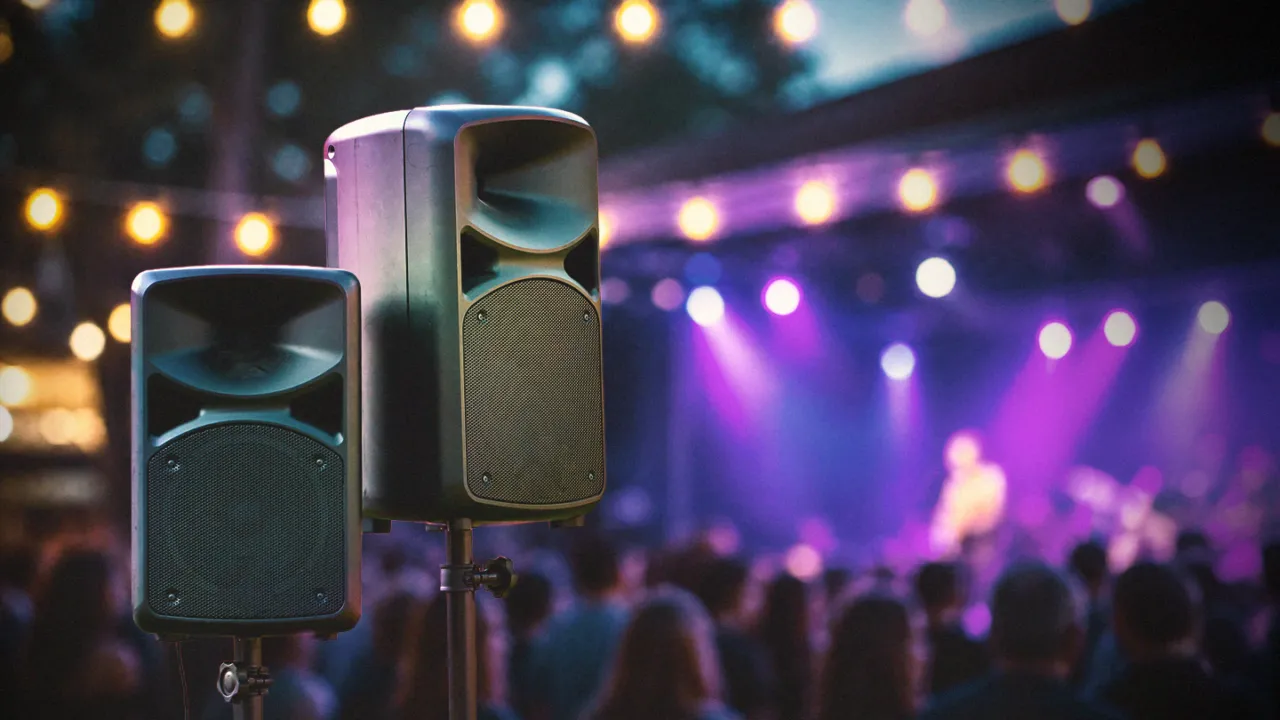
A high wattage rating won't save your event if your sound is blowing away in a stiff coastal breeze. Most organisers assume more power equals better results, but knowing how to choose PA system outdoor event equipment actually depends on "throw" and dispersion. It is about fighting the elements, not just the crowd.
We understand the frustration of staring at technical specs like SPL and RMS while worrying if your wireless mics are ACMA compliant. It is daunting to risk gear failure when expectations for live event quality are at an all-time high. This guide helps you master the technical essentials and local logistics to ensure your audio is crystal clear, regardless of the wind or weather. We will preview everything from weather-resistant IP ratings to the latest wireless frequency regulations, giving you the seasoned expert's edge for your next outdoor festival or function.
Key Takeaways
- Understand why raw wattage is a misleading metric and how sound dispersion determines your real-world performance in open spaces.
- Master how to choose PA system outdoor event equipment that maintains clarity even when fighting wind shear and ambient noise.
- Ensure your setup is ACMA compliant to avoid legal issues and wireless microphone interference during your live event.
- Learn the logistical essentials for weatherproofing and why using domestic extension cords is a major risk for outdoor audio.
- Discover how professional delivery and setup services provide technical peace of mind so you can focus on your guests.
Table of Contents
- Why Outdoor Audio is a Different Beast (The Wattage Myth)
- Technical Essentials: Dispersion, ACMA, and Active Power
- Sizing Your Setup: From Garden Weddings to Hunter Valley Festivals
- Weatherproofing and Logistics: Managing Wind, Rain, and Power
- Why Professional Setup and Delivery Beats "Dry Hire"
Why Outdoor Audio is a Different Beast (The Wattage Myth)
Organisers often get caught up in the numbers game. They see a 2000W sticker and assume it's enough to cover a football oval. It isn't. When learning how to choose PA system outdoor event gear, you have to account for the "open air" factor. Most people don't realise that wattage is just a measure of electrical power. It is not a direct measurement of how loud your guests will perceive the audio in a wide-open space.
In a standard indoor venue, walls and ceilings provide "room gain." Sound reflects off these surfaces, naturally boosting bass and perceived volume. Outdoors, those reflections vanish. Without boundaries, sound energy radiates in all directions and dissipates rapidly. This is why a system that sounds thunderous in a local hall can feel thin and quiet at a Hunter Valley vineyard. You lose the acoustic support of the room, meaning your speakers have to do all the heavy lifting on their own.
To get the results you want, focus on Sound Pressure Level (SPL). This is the actual measurement of acoustic volume. You also need significant "headroom." This refers to the gap between your normal operating volume and the point where the system starts to distort. Pushing a small system to its absolute limit to reach the back of the crowd results in harsh, crackly audio. This ruins the experience for everyone involved.
The Lack of Acoustic Reflections
Sound behaves like light from a torch. Indoors, the "room" is like a mirror-lined box that keeps the light bouncing. Outdoors, you are shining that torch into the night sky. The energy simply "drops off" much faster. You need speakers with superior "throw" to push clear audio across a larger physical footprint.
Choose the right size initially to prevent over-driving your gear. If you try to make a small setup do the work of a large one, you risk permanent damage. It is better to have a professional Public Address (PA) system with more capacity than you think you need. This ensures your speeches and music remain crisp even at the edge of the event perimeter. You won't have to crank the volume to 100% just to be heard.
Understanding RMS vs Peak Power
Ignore "Peak Power" or "Max Power" ratings on spec sheets. These are often marketing gimmicks representing what a speaker can handle for a fraction of a second before it fails. For a reliable outdoor event, the only number that matters is RMS (Root Mean Square).
RMS represents the continuous power a system can sustain for an 8-hour set without thermal failure. High-quality systems maintain their clarity over hours of use. Prioritise RMS over peak ratings to ensure your equipment stays cool and functional from the first speech to the final song. This is a vital part of how to choose PA system outdoor event equipment that won't let you down mid-way through a ceremony.
Technical Essentials: Dispersion, ACMA, and Active Power
Control where your sound travels to avoid wasting energy. In an open field, sound that heads toward the sky is lost forever. Learning how to choose PA system outdoor event hardware involves more than just picking the loudest box. You need speakers with specific dispersion patterns. Most professional outdoor speakers offer a 90-degree horizontal spread. This ensures your audio reaches the edges of the crowd without spilling over into areas where it isn't needed. It keeps the sound focused and the neighbours happy.
Don't skip the subwoofers. Bass waves are omnidirectional and dissipate faster than high frequencies in the open air. Without a dedicated sub, your audio will feel thin and tinny once the wind picks up. A subwoofer "grounds" the sound, providing the physical impact needed for music and high-stakes presentations. It allows your main speakers to focus on vocal clarity, which is essential for guest engagement. If you aren't sure which setup fits your footprint, checking out a specialist audio hire service can save you hours of guesswork.
ACMA Compliance and Wireless Frequencies
When you are deciding how to choose PA system outdoor event components, consider the legal landscape. The Australian Communications and Media Authority (ACMA) strictly regulates wireless frequencies. Using the 694-820 MHz band is prohibited and can lead to heavy fines. Cheap, off-the-shelf wireless mics often operate on crowded frequencies that suffer from local TV interference in Newcastle and the Hunter Valley.
Reliability is non-negotiable for speeches. Operating high-end equipment requires adhering to national standards for outdoor audio operations to ensure safety and performance. We recommend professional-grade solutions like the Sennheiser G4 500 Rack. These systems allow for frequency scanning to find clean, interference-free channels. Always look for the Regulatory Compliance Mark (RCM) on your wireless gear to ensure it meets Australian standards.
Active vs Passive PA Systems
Active speakers are the modern standard for most outdoor hires. They feature built-in amplifiers, which significantly simplifies your cabling. This reduces the "trip hazard" footprint at your venue and speeds up the setup process. Modern digital signal processing (DSP) acts as a virtual bodyguard for your equipment. It prevents thermal shutdown and protects the drivers if the system gets too hot during a summer afternoon.
Passive systems still have their place. For large-scale Hunter Valley festivals, passive line arrays powered by external amp racks offer more control. However, for 90% of outdoor functions, the convenience and built-in protection of an active system are superior. It's about choosing the right tool for the specific environment.
Sizing Your Setup: From Garden Weddings to Hunter Valley Festivals
Don't just count heads; measure the grass. When figuring out how to choose PA system outdoor event gear, the physical footprint of your venue is the most critical variable. Sound loses 6dB of volume every time you double the distance from the source. A pair of speakers might work for a small ceremony, but they'll struggle to reach the back of a 50-metre lawn without strategic placement.
Ambient noise is a silent killer for outdoor audio. Coastal wind, crashing surf, or nearby traffic in Newcastle can easily add 70-80dB of background noise. Your system must stay clear and audible above this baseline. If you are covering a long, narrow space, consider "delay stacks." These are secondary speakers placed further back that synchronise with the main stage. They prevent you from having to blast the front row just so the people at the back can hear the speeches.
Small to Medium Events (Up to 150 Guests)
Deciding how to choose PA system outdoor event packages for medium crowds requires a focus on driver size. For backyard parties or intimate ceremonies, simplicity is your best friend. Our Speaker Pack 1 provides a professional baseline that balances portability with performance. We generally recommend 12-inch tops for these settings. They offer superior vocal clarity for speeches compared to 15-inch models, which can sometimes sound muddy in the mid-range.
Maximise your coverage by getting your speakers up high on stands. If the speakers are at ear level, the front row acts as a human sound barrier. This leaves the rest of your guests straining to hear. Aim the speakers slightly downward toward the back third of the crowd to ensure even distribution across the entire space.
Large Scale and Festival Audio (500+ Guests)
Moving to a festival or large public gathering requires a structural shift. Once you exceed 500 guests, standard tripod stands become a safety risk and a technical limitation. This is where specialised Trailer Stages and line array systems become essential for the Hunter Valley's larger vineyard events. Line arrays are designed to project sound further and more evenly than traditional point source speakers.
Ensure even coverage across a large vineyard or parkland by hiring professional sound engineers. Managing multiple microphones and wind-gust compensation is a full-time job during a live set. A strategic layout eliminates dead zones and ensures every attendee has the same high-quality experience. This professional oversight prevents technical hitches from ruining the momentum of your event.
Weatherproofing and Logistics: Managing Wind, Rain, and Power
Open air exposes your gear to more than just a crowd. When learning how to choose PA system outdoor event equipment, you must account for the physical environment. Wind shear is a major factor that many organisers overlook. A strong coastal breeze can literally "blow" your high-end frequencies away, making your audio sound muffled to those downwind. High frequencies are more directional and lighter than low frequencies, so they are easily displaced by moving air.
Sunlight and heat are equally dangerous. Modern active speakers have built-in thermal protection, but direct afternoon sun can trigger a shutdown mid-speech. Position your equipment in the shade where possible. If the forecast looks dodgy, keep heavy-duty waterproof covers or tarps on hand. Sudden Hunter Valley showers don't have to end your event if you are prepared for a rapid response. Preparation is the key to keeping the show running.
Safety is paramount. A speaker stand is effectively a sail in high winds. You must secure every stand and stage component against sudden gusts. Sandbagging stands for coastal wind safety is a non-negotiable requirement for any professional outdoor setup. We recommend using heavy sandbags on the base of every tripod to prevent them from toppling. If you want a system that stays upright and operational, book a professional setup service to handle the heavy lifting and safety checks.
Power Supply and Cable Management
Clean power is the backbone of any reliable outdoor stage. Many organisers make the mistake of using long, domestic extension cords from a distant wall socket. This causes "voltage drop." Digital mixers and high-powered active speakers are sensitive to these fluctuations. If the voltage drops too low, your mixer might reboot or your speakers might clip prematurely. This is a critical factor in how to choose PA system outdoor event power solutions.
Use professional-grade, heavy-duty cables and dedicated circuits. For larger outdoor festivals, a professional generator is often a safer bet than a standard domestic outlet. Organise your cables using rubber cable ramps or heavy-duty gaffer tape. This prevents trip hazards on grassy or uneven terrain, keeping your guests safe and your connections secure. A tidy setup is a reliable setup.
Dealing with the Elements
Wind noise can ruin a recording or a live speech. Use "dead cats" or high-density foam windscreens on every microphone to stop that distracting "rushing" wind sound. These simple tools allow the speaker's voice to pass through while diffusing the air movement around the capsule. It ensures your audience hears the message, not the weather.
Preparation beats panic every time. Have a clear plan for protecting the PA system if a storm rolls in over the coast. This includes having a designated person to cut the power and cover the racks. Securing your equipment with sandbags and waterproof layers ensures that a bit of weather doesn't turn into a technical disaster.
Why Professional Setup and Delivery Beats "Dry Hire"
Renting the gear is only half the battle. Execution is where the magic happens. Many organisers opt for "dry hire" to save a few dollars, but they often end up stressed and sweaty before the first guest arrives. When you consider how to choose PA system outdoor event solutions, you have to think about the physical labour and technical precision required to make that gear work in a field.
Professional delivery and setup services remove the logistical friction. You shouldn't be moving heavy speakers or crawling through the grass to tape down cables on your wedding day. Our team handles the heavy lifting, ensuring your equipment is positioned for maximum coverage and safety. We also provide proper acoustic tuning. Every outdoor site has unique challenges; we use EQ to compensate for the lack of reflections, ensuring your audio sounds balanced rather than thin or harsh.
Redundancy is another critical factor. Professional hire companies always have a "Plan B" in the van. Whether it's a spare XLR cable, an extra microphone, or a backup power lead, we're prepared for the unexpected. If something goes pear-shaped mid-event, having an expert on-site means the problem is solved in seconds, often before the audience even notices. This technical safety net is what allows you to focus on your guests instead of the gear.
The Sonic Sound & Lighting Advantage
We've spent 20 years navigating the unique acoustic landscapes of Newcastle and the Hunter Valley. We know which vineyards have tricky power layouts and which coastal parks are prone to the heaviest wind shear. This local knowledge allows us to provide a seamless experience for time-poor organisers who need reliability above all else.
For larger productions, our Trailer Stages provide a complete turnkey solution for outdoor festival production. These stages integrate perfectly with our high-end audio gear, allowing you to scale up for community events without the headache of coordinating multiple vendors. Whether you need a simple Speaker Pack 1 or a full-scale festival rig with a Sennheiser G4 500 Rack, we bring the expertise to make it happen.
Your Next Steps for a Successful Event
Ready to lock in your audio? Requesting a quote is the first step toward a stress-free function. We'll help you account for your specific site challenges, from power availability to the physical footprint of the venue. Understanding how to choose PA system outdoor event hardware is easier when you have a seasoned veteran guiding your choice.
Remember to book early, especially during the peak Hunter Valley wedding season. Our most popular packages and specialised trailer stages fill up months in advance. Don't leave your event's clarity to chance with a DIY setup that might fail when the wind picks up.
Organise your outdoor PA hire with the Newcastle experts today and ensure your event sounds as professional as it looks.
Secure Crystal-Clear Sound for Your Next Event
Successful outdoor audio depends on more than just high-volume speakers. You now understand that sound "throw" and dispersion patterns are the real keys to overcoming the open-air drop-off. Prioritising ACMA-compliant wireless frequencies and robust weatherproofing ensures your message reaches every guest, regardless of the wind or crowd noise. Knowing how to choose PA system outdoor event hardware is about matching the right technology to your specific Hunter Valley or Newcastle venue.
Sonic Sound & Lighting provides the peace of mind that comes with 20+ years of industry experience across Newcastle and the Hunter Valley. We stock premium brands like Sennheiser and Celto Acoustique, ensuring your production meets the highest standards. By choosing our delivery and setup services, you eliminate the risk of technical failure and the physical strain of managing heavy gear.
Don't leave your event's success to chance. Get a Professional PA Hire Quote for Your Outdoor Event and let our specialists manage the logistics. We look forward to making your next outdoor function a sonic success.
Frequently Asked Questions
Can I use a standard home stereo for an outdoor party?
No, home stereos aren't designed for the lack of acoustic reflections found in open spaces. You'll likely over-drive the amplifier and blow the speakers while trying to reach the back of the group. Professional PA gear is built with the headroom and dispersion needed to push sound across an open lawn without distorting or failing.
How do I stop the wind from making noise in the microphones?
Use high-density foam windscreens or "dead cat" covers to diffuse air movement around the microphone capsule. These physical barriers stop the wind from hitting the element directly. Most digital mixers also feature a "high-pass filter" that an engineer can use to cut out the low-frequency rumble caused by gusty conditions.
What happens if it rains during my outdoor event?
Power down the system immediately if rain starts to fall. Water and electricity are a dangerous mix, and even a light drizzle can short out a digital mixer or an active speaker. We provide heavy-duty waterproof covers for our equipment to ensure it stays dry and operational once the weather clears.
Do I need a generator for a PA system in a park?
You only need a generator if there is no reliable mains power within 30 to 50 metres of your stage. Standard domestic outlets are often fine for a small setup, but larger rigs require a professional generator to avoid voltage drops. This is a key consideration when learning how to choose PA system outdoor event power sources.
How many speakers do I need for an outdoor wedding with 100 guests?
Two high-quality 12-inch speakers, such as our Speaker Pack 1, are usually sufficient for 100 guests. This setup provides enough volume for clear speeches and background music without taking up too much space. If you have a particularly long or wide ceremony area, adding a second pair of speakers as a delay stack can help fill the gaps.
Is wireless microphone hire reliable for outdoor ceremonies in the Hunter Valley?
Wireless systems are extremely reliable if you use professional-grade hardware like the Sennheiser G4 500 Rack. These systems allow us to scan for clean ACMA-compliant frequencies in the Hunter Valley, avoiding interference from local TV stations. High-end racks are essential for ensuring your vows aren't interrupted by static or dropouts.
What is the difference between active and passive PA systems for hire?
Active systems have the amplifier built directly into the speaker cabinet, making them faster to set up and easier to manage. Passive systems use separate amplifier racks and are typically reserved for very large festival stages. For most outdoor functions, active speakers are the smarter choice due to their built-in protection and simplified cabling.
Do you provide delivery and setup in the Central Coast region?
Yes, we provide full delivery and setup services across the Central Coast, Newcastle, and the Hunter Valley. Our team handles the heavy lifting and technical configuration so you don't have to worry about the gear. This professional oversight is a major part of how to choose PA system outdoor event services that guarantee a successful outcome.